


Hand Press Button Machine
Hand press button machines are often compact and lightweight, making them highly portable. They can be easily moved around a workshop or production floor, allowing for flexibility in workflow and setup.
Your Professional Hand Press Supplier
Wuxi Xinchao Garment Accessories Co., Ltd. was established in 2000. It is a professional manufacturer of hardware stamping parts.
Why Choose Us
Rich Experience
We have more than 20 years of experience in hardware stamping parts. Our products have been widely recognized and trusted by users, and can meet the changing economic and social needs.
Wide Product Range
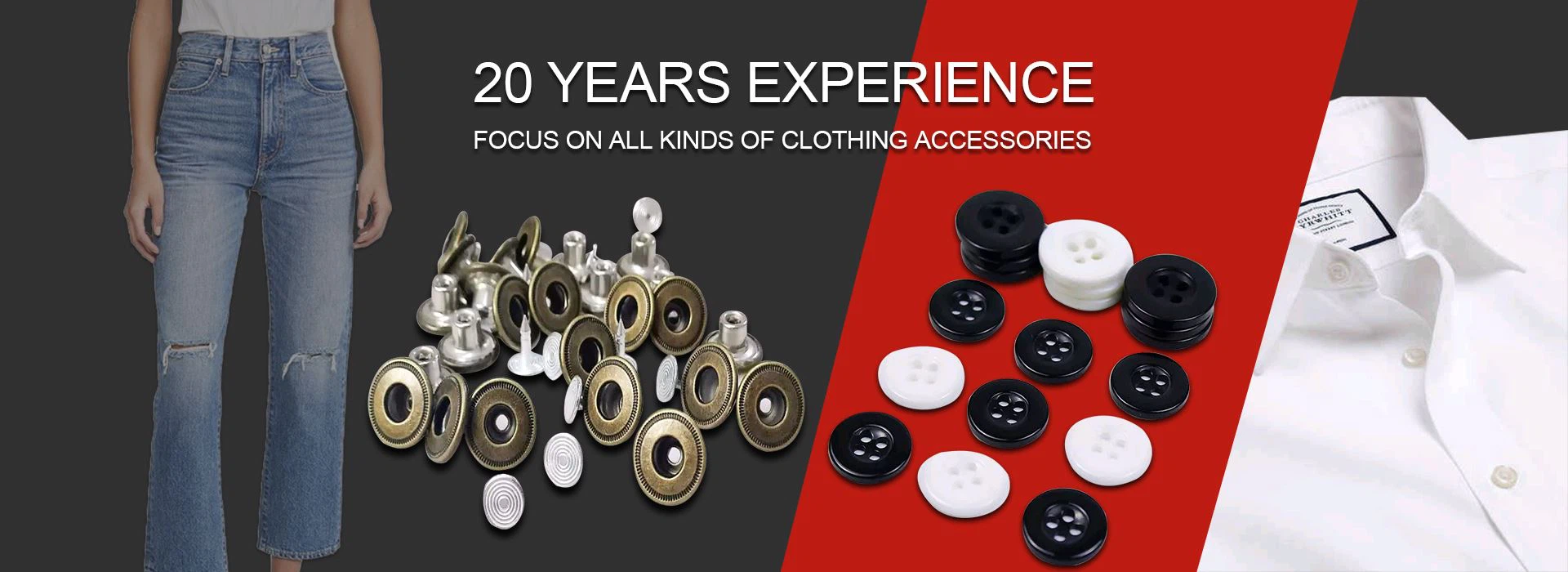
We produce buttons, chicken's eyes, thread clasps, rope clips, alloy parts, hand press and matching moulds, clothing, shoes and hardware accessories, with copper, iron, stainless steel, and other materials.
Customization Service
We provide OEM or sample (drawing) customization services. Besides, we also have various surface treatments, including plating, painting, etc. Customers are welcome to contact us to establish business relations and mutual success!
Quality Assurance
Wuxi Xinchao Accessories is a manufacturer of apparel metal accessories. It has perfect testing facilities and strong technical force. We have 3 production lines for manufacturing, and pride in the craftsmanship of our products, ensuring that each one meets our strict standards for quality.


Basically, the terms "button press" and "button machine" refer to the same product: a loadable, die-driven device that allows for quick, easy, and efficient production of a wide range of different types of buttons like pinbacks, fabric buttons, and photo buttons. A press button maker is also called a hand-press button machine. It can be used for pressing clothes, and other items like clothes, and bags. A hand-press button maker can be used to make small print buttons on laces or t-shirts. These hand-press button machines are widely used in restaurants, cafes, and hotels.
Working Principle of Hand Press
A hand press button machine typically operates on a straightforward mechanical principle. Here's a simplified explanation of how it works:
Design: The machine consists of a frame or housing that holds all the components together. It includes a lever or handle that the operator can press down.
Mechanical Advantage: The lever is designed to provide mechanical advantage, meaning that the force applied by the operator is amplified to exert a greater force on the button or workpiece being pressed.
Button Placement: The button to be pressed is positioned on a platform or holder beneath the lever.
Spring Mechanism: Inside the machine, there's often a spring mechanism. This spring stores potential energy when the lever is raised.
Pressing Action: When the operator presses down on the lever, several things happen simultaneously:
- The lever pushes against the spring, compressing it further.
- The mechanical advantage of the lever amplifies the force applied by the operator.
- The downward force is transferred through a mechanism, usually a piston or plunger, to the button or workpiece.
Compression: As the lever is pressed, the button is pushed into its intended position, whether that's securing two materials together, activating a switch, or any other purpose for which the button is designed.
Release: When the operator releases the lever, the stored energy in the spring is released, pushing the lever back to its original position and resetting the machine for the next operation.
This basic mechanism allows for the efficient and reliable pressing of buttons or similar components. It's commonly used in various industries for tasks like assembling electronics, attaching fasteners, or producing small parts.
Hand press button machines offer several advantages in various industries and applications. Here are some key advantages of using hand press button machines:
Ease of Use: Hand press button machines are designed to be user-friendly and require minimal training to operate. They typically have a simple lever or handle that can be easily pressed down, making them accessible to operators of different skill levels.
Cost-Effective: Hand press button machines are generally more affordable compared to automated or pneumatic machines. They are a cost-effective solution for small-scale operations or businesses with limited budgets.
Portability: Hand press button machines are often compact and lightweight, making them highly portable. They can be easily moved around a workshop or production floor, allowing for flexibility in workflow and setup.
Versatility: These machines can be used for a wide range of applications. They are suitable for pressing buttons, eyelets, rivets, grommets, snaps, and other fasteners onto various materials. They find applications in industries such as garment manufacturing, leatherwork, shoe manufacturing, packaging, and more.
Speed and Efficiency: Hand press button machines enable fast and efficient button pressing operations. With the mechanical advantage provided by the lever, operators can exert a greater force with less effort, resulting in quicker and more consistent button placements. This helps to improve productivity and reduce production time.
Precise and Consistent Results: Hand press button machines are designed to provide accurate and consistent button placements. The machines are often equipped with guides or templates that ensure precise positioning of the buttons on the workpiece. This helps to maintain uniformity and quality in the final product.
Durability and Reliability: Hand press button machines are typically built to be robust and durable. They are made from high-quality materials that can withstand repeated use and heavy-duty applications. With proper maintenance, these machines can have a long operational life.
Safety: Hand press button machines prioritize operator safety. They are designed with safety features such as guards or shields that protect the operator's hands during the pressing operation. Additionally, these machines do not require electricity or pneumatic power, reducing the risk of electrical or air-related accidents.
Flexibility and Customization: Hand press button machines can often be customized to suit specific requirements. They can accommodate different button sizes, shapes, and materials. Some machines allow for adjustable pressure settings, enabling operators to adapt to different materials or thicknesses.
Low Maintenance: Hand press button machines generally have low maintenance requirements. They do not have complex electrical or pneumatic systems, reducing the need for frequent servicing or repairs. Regular cleaning and lubrication of moving parts are usually sufficient to keep the machine in good working condition.
Energy Efficiency: Hand press button machines do not require electricity to operate, making them energy-efficient. This can contribute to cost savings and environmental sustainability.
Uses of Hand Press
Hand press button machines find a multitude of applications across various industries due to their versatility, efficiency, and ease of use. Here's a comprehensive exploration of the applications of hand press button machines:
Garment Manufacturing
Hand press button machines are extensively used in garment manufacturing for attaching buttons onto clothing items such as shirts, pants, jackets, and dresses. They offer precise button placements, ensuring uniformity in appearance and functionality. These machines can handle various types of buttons, including plastic, metal, or fabric-covered buttons, catering to different garment styles and materials.
Leatherwork
In the leather industry, hand press button machines are essential for attaching snaps, rivets, and eyelets to leather goods such as bags, belts, wallets, and shoes. They provide the necessary force to securely fasten hardware onto thick and durable leather materials, ensuring longevity and durability of the finished products.
Shoe Manufacturing
Hand press button machines play a crucial role in shoe manufacturing processes by attaching eyelets, grommets, and decorative buttons onto footwear components. They facilitate efficient assembly of shoe uppers, ensuring proper alignment and strength of the fastenings for comfortable and long-lasting shoes.
Crafts and DIY Projects
Hobbyists, artisans, and DIY enthusiasts utilize hand press button machines for various crafting projects, including fabric crafts, scrapbooking, and jewelry making. These machines offer precise control over button placements, allowing creators to embellish their handmade creations with decorative buttons, snaps, and eyelets.
Stationery and Office Supplies
Manufacturers of stationery and office supplies utilize hand press button machines for producing notebooks, binders, and folders with custom button closures. These machines enable efficient attachment of button fasteners onto paper and cardboard materials, enhancing the functionality and aesthetics of office products.
Outdoor Gear and Equipment
Manufacturers of outdoor gear and equipment utilize hand press button machines for assembling backpacks, tents, tarps, and outdoor clothing. These machines facilitate the attachment of durable fasteners and hardware onto rugged outdoor materials, enhancing the performance and durability of outdoor gear.
Main Parts of Hand Press
Different types of hand press button machines have almost common types of main parts. These parts are described below.
Base
The all-machine tool, the base is one of the parts of a press. It is the main supporting member for workpiece holding dies and different controlling mechanisms of the press. The size of the table limits the size of the workpiece that can be processed on a press. In the case of some special presses, the base carries a mechanism for tilting the frame in any desirable inclined position too.
Frame
Frame constitutes the main body of the press located at one edge of its base. It houses support for RAM, driving mechanisms, and control mechanisms. Some of the press have a column-shaped frame.
Ram
This is the main operating part of the press which works directly during the processing of a workpiece. Ram reciprocates to and fro within its guideways with prescribed stroke length and power. The stroke length and power transferred can be adjusted as per the requirements. Ram at its bottom end carries punch to process the workpiece.
Pitman
It is the part that connects the ram and crankshaft or ram eccentric.
Driving Mechanism
Different types of driving mechanisms are used in different types of presses like a cylinder and piston arrangement in a hydraulic press, crankshaft and eccentric mechanisms in a mechanical press, etc. these mechanisms are used to drive ram by transferring power from the motor to ram.
Controlling Mechanisms
Controlling mechanisms are used to operate a press under predetermined controlled conditions. Normally two parameters are adjusted by controlling mechanisms length of stroke of ram and power of the stroke. Transfer of power can be disengaged with the help of a clutch provided with driving mechanisms as per need. In most of the presses controlling mechanisms is inbuilt with the driving mechanisms.
Flywheel
In most of the presses, driven gear or driven pulley is made of the shape of the flywheel, which is used for storing the energy reserve wire of energy) for maintaining a constant speed of ram when the punch is pressed against the workpiece. Flywheel is placed in the driving mechanism just before the clutch is a sequence of power transmission.
Brakes
Brakes are very urgent in any mobile system. Generally two types of brakes are used normal brake, which can bring the driven shaft to rest quickly after disengaging it from the flywheel. Other is emergency brakes which are provided as foot brakes to any machine. These brakes include power off switch along with normal stronger braking to bring all motions to rest quickly.
Balster Plate
It is a thick plate attached to the bed or base of the press. It is used to clamp the die assembly rigidly to support the workpiece. The die used in press working may have more than one part that is why the phrase die assembly is being used at the place of the die.
Maintenance of Hand Press
Proper maintenance of a hand press button machine is essential to ensure its longevity, optimal performance, and safety. Here are some important maintenance practices to keep your hand press button machine in good working condition:
Regular Cleaning
Clean the machine regularly to remove dust, debris, and accumulated residue. Use a soft brush or cloth to clean the exterior surfaces, buttons, and levers.
Pay attention to the areas around the button dies or attachment points, as dirt or debris in these areas can affect the machine's performance.
Avoid using harsh chemicals or abrasive materials that could damage the machine's surfaces.
Lubrication
Lubricate the moving parts of the machine periodically to ensure smooth operation. Consult the manufacturer's guidelines for the recommended lubrication intervals and types of lubricants to use.
Apply a small amount of lubricant to the pivot points, hinges, and other moving parts. Wipe off any excess lubricant to prevent it from attracting dust or debris.
Inspect and Replace Worn Parts
Regularly inspect the machine for any signs of wear, damage, or loose components. Pay attention to the button dies, springs, and other critical parts.
If you notice any worn or damaged parts, replace them promptly to avoid compromising the machine's performance or safety.
Consult the machine's user manual or contact the manufacturer for guidance on identifying and replacing specific parts.
Adjustment and Calibration
Periodically check and adjust the machine's settings and calibration to ensure accurate button placements and consistent results.
Verify that the button dies are aligned properly, and adjust them if necessary. Ensure that the pressure settings are appropriate for the materials being used.
Follow the manufacturer's instructions for making adjustments and calibrations, as each machine may have specific procedures.
Proper Storage
When the machine is not in use, store it in a clean and dry environment to prevent dust, moisture, or other contaminants from affecting its performance.
Cover the machine with a protective cloth or use a dust cover to shield it from dust and debris.
If the machine has removable parts, such as button dies or attachments, store them separately in a designated container to prevent loss or damage.
Scheduled Maintenance and Servicing
Follow the manufacturer's recommended maintenance schedule for the machine.
Arrange for periodic professional servicing or inspection of the machine to address any potential mechanical issues or adjustments that may be required.
Common Problems of Hand Press
Hot Tags: hand press button machine, China hand press button machine suppliers, manufacturers, metal button jacket, stainless steel cable hooks, leather button up, stainless steel chain hook, handmade wooden buttons, seashell buttons


Send Inquiry
