

Different Types of Buttons and Their Applications in Fashion & Accessories
Aug 08, 2025
Buttons may seem like small details, but in the world of fashion and accessories, they play a major role in both functionality and design. A button is not just a fastener; it can also be a statement piece, adding elegance, character, or uniqueness to garments, footwear, and even handbags. Understanding the different types of buttons and their applications helps designers, manufacturers, and consumers make the right choice for every fashion item.
1. Plastic Buttons
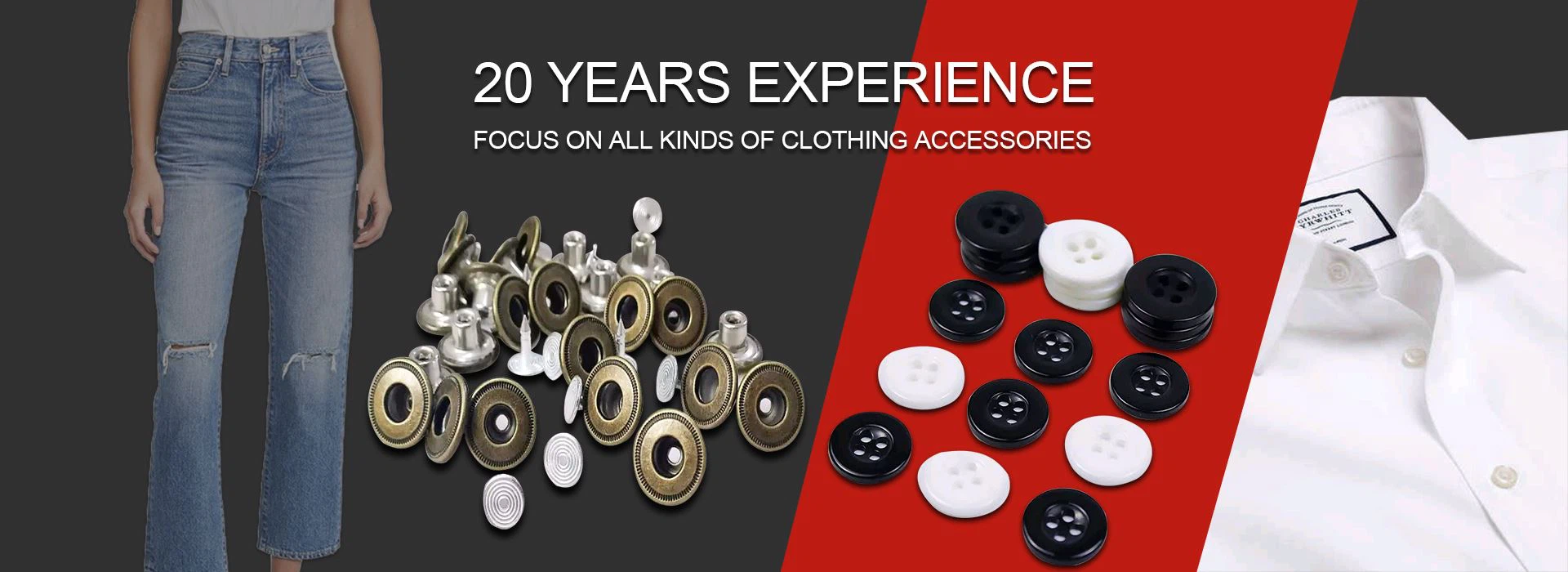
Plastic buttons are the most common and versatile. Lightweight, affordable, and available in countless shapes, colors, and finishes, they are widely used in shirts, blouses, dresses, and children's clothing. Their durability and resistance to wear make them ideal for everyday garments. Designers often use plastic buttons when they need functional fasteners without adding significant cost.
2. Metal Buttons
Metal buttons are known for their strength, durability, and distinctive appearance. They are popular in jeans, jackets, uniforms, and outdoor wear. Brass, stainless steel, or alloy buttons can be polished, antique-finished, or engraved with logos for branding purposes. In addition to fashion, metal buttons are also common in accessories such as bags, belts, and shoes, giving them a premium and sturdy look.
3. Wooden Buttons
Wooden buttons add a natural, eco-friendly touch to garments. Their rustic texture and warm tones are ideal for knitwear, coats, and handmade clothing. They are often chosen by designers who want to emphasize sustainability and organic style. Wooden buttons may be carved, painted, or laser-etched, making them popular in artisanal fashion collections.
4. Shell and Mother-of-Pearl Buttons
Shell buttons, often made from natural seashells or mother-of-pearl, are highly valued for their elegant sheen and luxurious feel. They are especially common in high-quality dress shirts and tailored clothing. Each button has unique iridescent patterns, which add sophistication and individuality to garments. Their natural origin also makes them an environmentally conscious choice for premium fashion brands.
5. Fabric-Covered Buttons
These buttons are made by covering a plastic or metal base with fabric, often matching or contrasting with the garment itself. Fabric-covered buttons are widely used in dresses, evening gowns, and decorative accessories. They provide a seamless look while enhancing the overall design, making them a favorite in haute couture and bridal fashion.
6. Snap Buttons
Snap buttons are two-part fasteners that "snap" together, providing quick and easy closure. They are common in sportswear, baby clothes, outerwear, and functional accessories. Made from metal or plastic, snap buttons are chosen for their practicality and secure fastening, especially where speed and convenience are essential.
7. Decorative and Novelty Buttons
Beyond function, buttons can serve purely decorative purposes. Novelty buttons come in playful shapes, such as flowers, animals, or themed symbols, and are often used in children's wear, craft projects, and fashion accessories. Decorative buttons with rhinestones, enamel, or artistic designs are also common in luxury garments, shoes, and handbags, adding an extra layer of personality and uniqueness.
8. Application in Accessories
Buttons are not limited to clothing. In accessories like handbags, wallets, hats, and shoes, they serve both as fasteners and as design highlights. A carefully chosen button can transform a simple leather bag into a stylish statement piece or add character to footwear.
From practical fasteners to decorative embellishments, buttons come in a wide variety of types, each serving a specific purpose in fashion and accessories. Whether it is the elegance of a mother-of-pearl button, the durability of metal, or the eco-friendly charm of wood, the choice of button can define the overall style and quality of a product. For designers and manufacturers, selecting the right button is not just about functionality-it is about expressing creativity and enhancing the identity of the garment or accessory.


