What Are Garment Fasteners? Types, Materials and Common Applications Explained
Aug 02, 2026
Garment fasteners are small components, but they can have a direct impact on how a garment is assembled, adjusted, opened, closed, or reinforced. For apparel manufacturers, choosing the right fastener is not simply a matter of appearance. The fabric, application, fastening method, expected load, installation process, and production volume all need to be considered.
Common garment fasteners include snap fasteners, metal buttons, trouser hooks, rivets, eyelets, cord locks, buckles, and other small metal or plastic components.
For manufacturers and buyers, the right choice depends on where the component will be used and how much mechanical stress it will experience.
What Are Garment Fasteners?
Garment fasteners are components used to join, close, adjust, reinforce, or secure different parts of clothing and textile products.
Unlike decorative garment accessories, a fastener normally has a functional purpose. A snap button closes a jacket or baby garment. A trouser hook secures a waistband. A rivet reinforces a high-stress point on jeans. An eyelet creates a reinforced opening for a lace, cord, or ventilation area.
Some fasteners are sewn onto the fabric, while others are installed by pressing, riveting, or using dedicated dies.
For bulk apparel production, the fastener and its installation method should be considered together. A good component can still cause production problems if the installation tool or die does not match it correctly.
Common Types of Garment Fasteners
1. Snap Fasteners
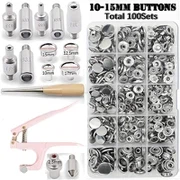
Snap fasteners, also called snap buttons or press studs, consist of mating components that allow fabric panels to be opened and closed repeatedly.
They are widely used on jackets, shirts, children's clothing, workwear, bags, and other textile products.
Depending on the application, buyers may select:
Metal snap buttons
Plastic snap buttons
Sew-on snap buttons
Press-fitted snap fasteners
T3, T5, T8 and other size options
When selecting snap fasteners, fabric thickness is particularly important. A fastener designed for lightweight fabric may not provide the same installation performance on thick canvas or leather.
2. Metal Buttons
Metal buttons are commonly used where appearance and durability are both important. They can be used as functional closures or as decorative elements on garments.
Typical applications include jeans, jackets, coats, uniforms, workwear, and fashion garments.
The surface finish is often an important purchasing consideration because the button remains visible after assembly. Buyers may specify the material, plating or finish, size, color, and logo requirements according to the garment design.
3. Trouser Hooks
Trouser hooks, particularly the hook-and-bar type, are commonly used around waistbands.
They provide a compact closure without adding a large visible button to the outside of the garment. They are frequently found on trousers, suit pants, skirts, and formalwear.
For waistband applications, the hook needs to hold securely while allowing practical opening and closing during normal use.
4. Garment Rivets
Garment rivets are used primarily for reinforcement rather than simple closure.
They are strongly associated with denim manufacturing, especially around pocket corners and other areas exposed to repeated pulling forces. Rivets are also used on leather goods, canvas products, bags, and workwear.
Common types include standard metal rivets and double cap rivets.
The key issue with rivets is not only the rivet itself. The material thickness, hole size, rivet length, and installation pressure all influence the final result.
5. Metal Eyelets and Grommets
Metal eyelets create reinforced openings in fabric and other flexible materials.
They are commonly used for:
- Shoelaces
- Drawstrings
- Hood cords
- Bags
- Caps
- Sportswear
- Outdoor products
- Ventilation openings
Metal mesh eyelets are another option when the application requires an opening that also allows airflow.
The correct eyelet size should be selected according to the cord, lace, hole diameter, material thickness, and intended application.
6. Cord Locks
Cord locks are adjustment components used with drawstrings and elastic cords.
They are common in jackets, hoodies, sportswear, backpacks, bags, outdoor clothing, and other products where the user needs to adjust cord tension or length.
A double-hole cord lock, for example, allows the cord to pass through two openings and can provide a simple way to control the position of the cord.
Plastic is commonly used for lightweight applications, while the required strength and appearance determine whether another material or construction is more appropriate.
7. Buckles and Other Garment Hardware
Buckles, D-rings, end clips, chains, and related hardware are also used in garments and textile products.
Unlike a snap button, these components may be used for adjustment, attachment, reinforcement, or decoration.
They are particularly common in bags, straps, outerwear, uniforms, accessories, and products where webbing or cords need to be connected or adjusted.
What Materials Are Used for Garment Fasteners?
The material should be selected according to the application rather than appearance alone.
Metal
Metal is widely used for fasteners that require strength, durability, and a specific surface appearance.
Metal garment hardware is commonly selected for jeans, jackets, workwear, leather goods, bags, and other products exposed to repeated mechanical use.
Plastic
Plastic fasteners are useful when lightweight construction, color flexibility, or easier handling is important.
Plastic snap buttons and cord locks are common in lightweight apparel, kidswear, sportswear, bags, and DIY applications.
Coated or Finished Surfaces
For metal components, the surface finish can influence both appearance and product requirements. Buyers may request different colors or finishes to match the garment design.
For production orders, it is important to confirm whether the specified finish needs to meet particular environmental, durability, or market requirements.
How Do You Choose the Right Garment Fastener?
There is no single fastener that works for every garment. We normally recommend looking at several factors before confirming a specification.
1. Fabric thickness
A lightweight fabric, denim, leather, and heavy canvas require different fastening solutions.
2. Mechanical load
Consider whether the fastener is mainly decorative, used for closure, or exposed to repeated pulling and impact.
3. Installation method
Check whether the component is sewn, pressed, riveted, or installed with pliers or a hand press.
4. Fastener size
The size needs to match the fabric thickness and the required fastening strength.
5. Surface finish
For visible hardware, color and finish should match the garment design and market requirements.
6. Production volume
A DIY project and a large apparel production line have very different tooling and installation requirements.
For bulk production, it is often more efficient to confirm the fastener, installation tool, and matching die as one complete system rather than selecting each component separately.
Garment Fasteners by Application
Different products normally use different combinations of fasteners.
| Application | Common Fasteners |
|---|---|
| Jeans | Metal buttons, garment rivets |
| Jackets | Snap fasteners, metal buttons, cord locks |
| Trousers | Trouser hooks, buttons |
| Sportswear | Snap buttons, cord locks, eyelets |
| Workwear | Metal buttons, snap fasteners, rivets |
| Bags | Rivets, eyelets, buckles, D-rings |
| Caps | Metal buttons, eyelets |
| Shoes | Metal eyelets |
| Outdoor products | Eyelets, cord locks, buckles |
| Leather goods | Rivets, snap buttons, buckles |
This is why garment hardware should be selected according to the finished product rather than simply according to the component's appearance.
What Should Buyers Check Before Ordering Garment Fasteners?
For wholesale or OEM orders, a product name alone is usually not enough.
Before placing an order, confirm:
- Fastener type
- Material
- Size
- Finish and color
- Fabric or material thickness
- Installation method
- Matching die or mold
- Required quantity
- Sample approval
- Packaging requirements
- Custom logo or specification requirements
For manufacturers, consistency between the fastener and installation tooling is especially important. A small difference in component dimensions can affect assembly quality when thousands or millions of pieces are processed.
Garment Fasteners for OEM and Wholesale Supply
At Wuxi Xinchao Garment Accessories Co., Ltd., garment fasteners are part of a broader range of garment hardware and installation solutions.
Our product range covers snap fasteners, metal buttons, trouser hooks, rivets, eyelets, cord locks, buckles, and related accessories, as well as hand presses, pliers, and matching dies.
With a large range of specifications available, buyers can select components according to garment type, material, fastening method, and production requirements. OEM and customized specifications can also be developed from samples or technical drawings.
For apparel manufacturers, distributors, and trading companies, the goal is not simply to find a fastener that fits the product. The more important objective is to find a component that can be installed consistently and perform reliably in the finished product.
Choosing the fastener, installation method, and tooling together is often the most practical starting point for a stable production process.