

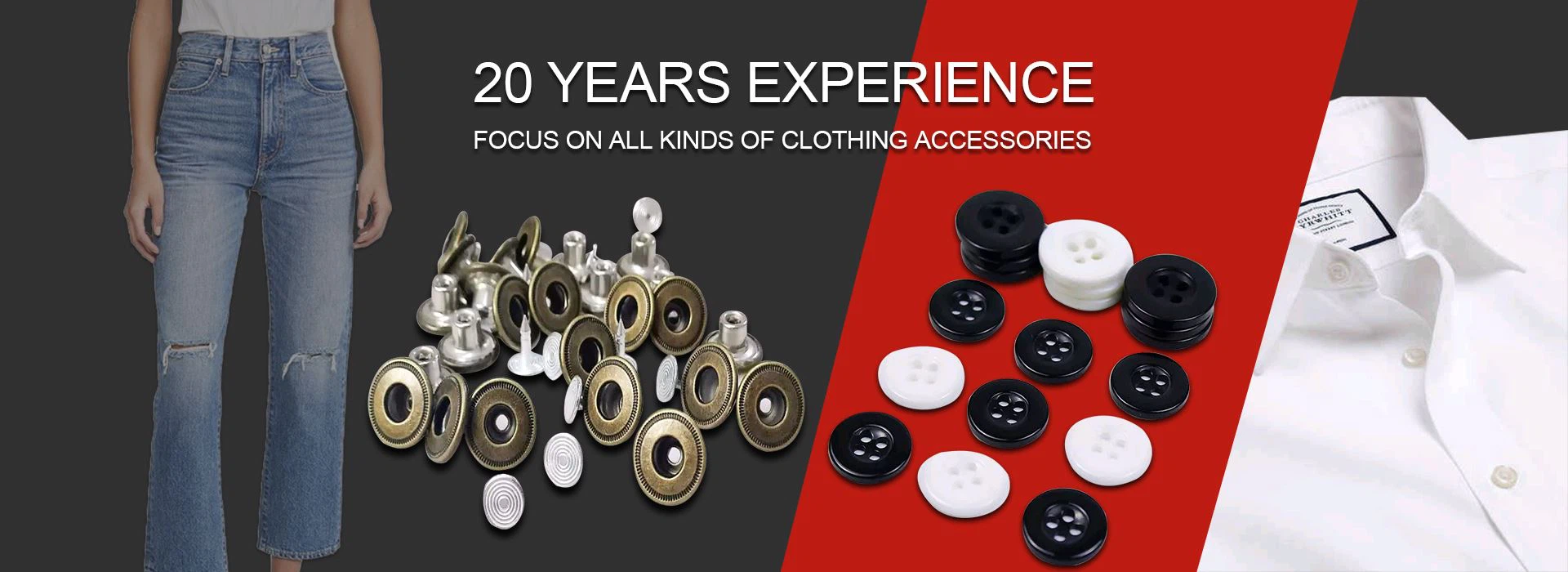
What Types of Metal Fasteners Are Commonly Used in Clothing Manufacturing?
Aug 30, 2026
Metal fasteners play an important role in modern clothing manufacturing. Although they are usually small components, they directly affect garment durability, appearance, and user experience.
From jeans and jackets to workwear, leather products, and outdoor clothing, different types of metal fasteners are selected according to fabric thickness, fastening function, and production requirements.
For apparel manufacturers, choosing the correct metal fastener is not only about appearance. The component must also match the fabric, installation method, and expected usage conditions.
Common metal fasteners used in clothing manufacturing include metal snap buttons, garment rivets, metal buttons, trouser hooks, eyelets, buckles, and other garment hardware components.
What Are Metal Fasteners in Clothing Manufacturing?
Metal fasteners are hardware components made from materials such as brass, stainless steel, aluminum, or metal alloys that are used to join, close, adjust, or reinforce textile products.
Unlike decorative accessories, functional metal fasteners need to withstand repeated use.
For example:
A jacket snap button may be opened and closed hundreds or thousands of times.
A jeans rivet may need to reinforce a pocket corner under repeated pulling force.
A trouser hook needs to maintain secure waistband closure during daily wear.
Therefore, the right metal fastener depends on where it is used and what type of stress it experiences.
1. Metal Snap Buttons (Snap Fasteners)
Metal snap buttons are among the most widely used metal fasteners in apparel manufacturing.
Also known as press studs or metal snap fasteners, they consist of several components that connect together to provide a practical opening and closing solution.
They are commonly used in:
- Jackets
- Shirts
- Workwear
- Baby clothing
- Outdoor clothing
- Bags
- Leather products
The main advantages of metal snap buttons include:
- Easy opening and closing
- Reliable fastening performance
- Good durability
- Clean appearance
- Suitable for repeated use
When selecting metal snap buttons, manufacturers usually consider:
- Snap button size
- Fabric thickness
- Installation method
- Required fastening strength
- Surface finish
For example, lightweight garments may use smaller snap buttons, while jackets and heavy fabrics may require stronger configurations.
2. Metal Garment Rivets
Metal rivets are mainly used for reinforcement rather than opening and closing.
They are especially common in denim manufacturing.
The classic example is jeans. Pocket corners experience repeated pulling forces, and rivets help distribute stress and reduce the risk of fabric tearing.
Common applications include:
- Jeans
- Denim jackets
- Leather bags
- Canvas products
- Workwear
Common types include:
- Single cap rivets
- Double cap rivets
- Tubular rivets
When choosing garment rivets, buyers should consider:
- Material thickness
- Number of fabric layers
- Rivet length
- Cap design
- Installation pressure
A rivet that is too short may not form a secure connection, while one that is too long may affect appearance and installation quality.
3. Metal Buttons
Metal buttons are widely used in fashion garments where both function and appearance are important.
They are commonly found on:
- Jeans
- Coats
- Jackets
- Uniforms
- Military-style clothing
- Fashion garments
Compared with plastic buttons, metal buttons often provide:
- Stronger visual impact
- Premium appearance
- Better suitability for heavy fabrics
Manufacturers can select different finishes depending on the garment design, including:
- Nickel finish
- Antique finish
- Black finish
- Custom color plating
For fashion brands, the surface appearance of metal buttons can become part of the garment's overall design language.
4. Trouser Hook and Bar Fasteners
Trouser hook and bar fasteners are commonly used for waistband closure.
They are frequently found in:
- Suit trousers
- Formal pants
- Skirts
- Uniforms
- Tailored garments
Compared with traditional buttons, trouser hooks provide a more hidden and professional closure.
Important selection factors include:
- Hook size
- Metal strength
- Waistband thickness
- Sewing position
- Garment design
For formalwear, the fastener needs to remain secure while maintaining a clean appearance.
5. Metal Eyelets and Grommets
Metal eyelets are used to reinforce holes in fabric and prevent tearing.
They are commonly used for:
- Shoelaces
- Hood drawstrings
- Sportswear
- Bags
- Outdoor clothing
- Caps
A special type is metal mesh eyelets, which combine ventilation and reinforcement functions.
Applications include:
- Baseball caps
- Sports products
- Outdoor equipment
- Ventilated garments
When selecting eyelets, manufacturers need to consider:
- Hole diameter
- Material thickness
- Installation method
- Required airflow
- Visual appearance
6. Metal Buckles and Strap Hardware
Metal buckles are commonly used in garments and accessories where adjustment or connection is required.
Applications include:
- Belts
- Bags
- Backpacks
- Outdoor products
- Fashion accessories
Common examples include:
- D-rings
- Metal buckles
- Strap adjusters
- Loops
These components often experience pulling force, so strength and surface durability are important considerations.
Comparison of Common Metal Fasteners
| Metal Fastener | Main Function | Common Applications |
|---|---|---|
| Metal Snap Buttons | Opening and closing | Jackets, shirts, workwear |
| Metal Rivets | Reinforcement | Jeans, leather goods, bags |
| Metal Buttons | Closure & decoration | Denim, coats, uniforms |
| Trouser Hook and Bar | Waistband closure | Suit pants, trousers |
| Metal Eyelets | Hole reinforcement | Shoes, clothing, bags |
| Metal Buckles | Adjustment & connection | Bags, straps, outdoor products |
How Do Manufacturers Choose the Right Metal Fastener?
When selecting metal fasteners for clothing production, manufacturers usually evaluate several factors.
1. Fabric Type
Different materials require different fastening solutions.
Examples:
Lightweight fabric → smaller or lighter fasteners
Denim → stronger metal buttons and rivets
Leather → durable rivets and snap buttons
Canvas → heavy-duty hardware
2. Application Position
A waistband, pocket corner, jacket front, and drawstring opening all experience different forces.
The fastener should match the function of that location.
3. Installation Method
Metal fasteners may require:
- Sewing
- Hand press tools
- Snap button pliers
- Riveting machines
- Matching dies
The installation process directly affects the final quality.
4. Surface Finish Requirements
For visible hardware, finish consistency is important.
Manufacturers may specify:
- Color
- Plating
- Logo
- Texture
- Appearance requirements
5. Production Volume
Large apparel production requires stable specifications and consistent installation performance.
For bulk orders, buyers should confirm samples before mass production.
Common Problems When Using Metal Fasteners
Even high-quality metal fasteners can fail if the wrong specification is selected.
Common problems include:
Fastener Pull-Out
Usually caused by:
- Weak fabric structure
- Incorrect size selection
- Insufficient reinforcement
Loose Snap Buttons
Possible causes:
- Incorrect installation pressure
- Wrong die
- Mismatched components
Rivet Deformation
Often related to:
- Incorrect rivet length
- Excessive installation pressure
- Incorrect tooling
Surface Damage
May result from:
- Improper handling
- Unsuitable finishing requirements
- Incorrect storage conditions
This is why professional garment hardware suppliers usually evaluate the fastener together with the material and installation process.
Metal Fasteners for OEM Clothing Production
At Wuxi Xinchao Garment Accessories Co., Ltd., we supply a wide range of garment hardware solutions, including:
- Metal snap buttons
- Snap fasteners
- Garment rivets
- Metal buttons
- Trouser hooks
- Metal eyelets
- Mesh eyelets
- Cord locks
- Buckles
Installation tools and matching dies
For apparel manufacturers, wholesalers, and brands, selecting the right metal fastener is about balancing:
strength + appearance + fabric compatibility + installation efficiency
A suitable metal fastener should not only look good on the finished garment but also maintain reliable performance throughout the product's service life.


