

Common Applications of Buttons in Fashion, Uniform and Industrial Garments
Apr 27, 2026
Last spring, a design director from a Shanghai fashion brand visited our sample room with a clear vision but an open question. She was developing a new line of urban utility jackets that blended streetwear aesthetics with functional details. She loved the look of antique brass buttons for the front closure but worried about weight, washability, and whether they would feel comfortable against the skin during all-day wear. We didn't push a specific product. Instead, we pulled samples of both metal and high-density resin buttons in similar finishes, sewed them onto fabric swatches matching her jacket material, and walked her through how each would perform through production, retail, and real-world use. By the end of the session, she had a clear direction: metal buttons for the visible placket where aesthetic presence mattered most, and matching resin buttons for the inner cuffs and adjustable straps where flexibility and wash resistance were priorities.
At Wuxi Xinchao Garment Accessories Co., Ltd., we have supplied buttons to fashion houses, uniform manufacturers, and industrial workwear producers for over fifteen years. The question we hear most-"Which button works best for my garment?"-rarely has a single answer. The right choice depends on the garment's purpose, its expected lifecycle, the production environment, and the wearer's experience. Below is a straightforward, field-tested overview of how buttons actually function across three core apparel sectors, based on what we have observed on cutting tables, sewing lines, and in the field-not theoretical guidelines or catalog descriptions.
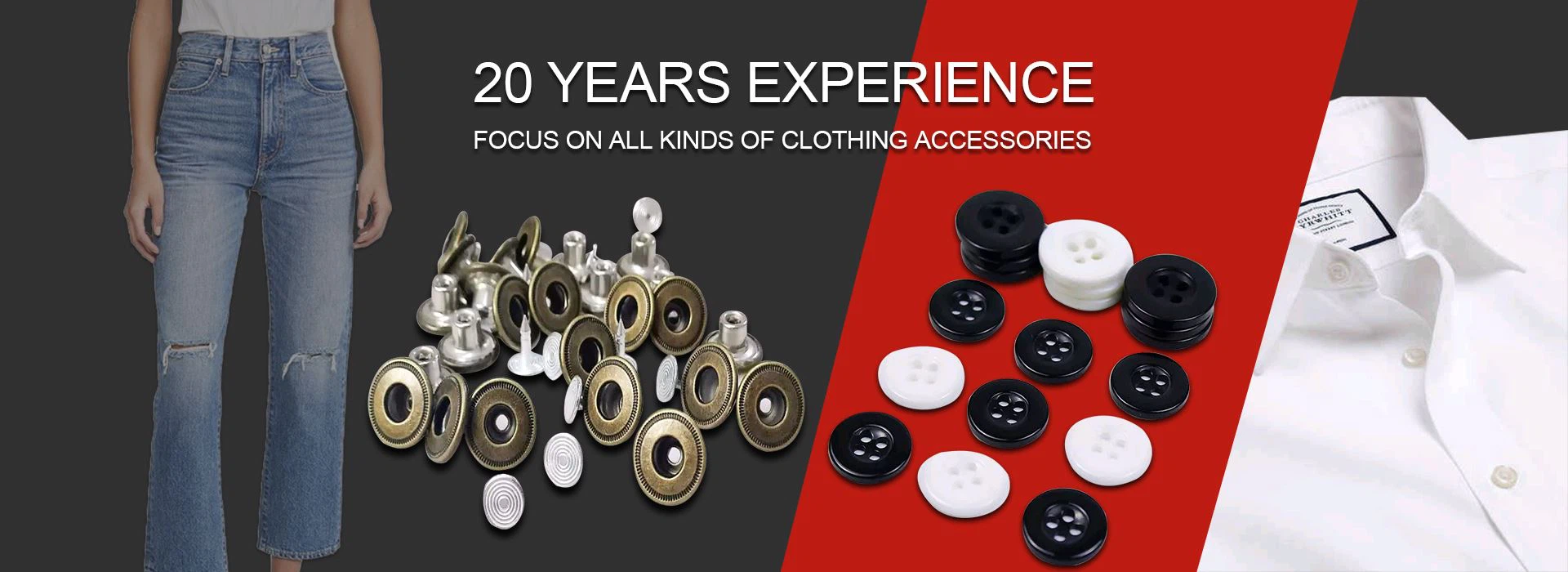
In fashion apparel, buttons often serve a dual role: functional closure and design accent. Designers select buttons not just for how they fasten a garment, but for how they communicate brand identity, texture, and attention to detail. Resin buttons dominate in this space because they accept intricate molds, vibrant colors, and surface finishes that align with seasonal trends. A luxury knitwear brand might specify pearlized resin buttons with subtle iridescence to complement a cashmere blend, while a contemporary streetwear label could opt for matte black resin with laser-etched logos for a minimalist aesthetic. Metal buttons appear in fashion when weight, presence, or heritage styling matters. Denim brands often use copper or brass rivet-style buttons to reinforce stress points while reinforcing a rugged visual language. The key in fashion applications is consistency across production runs. A button that looks perfect in a sample but varies in color or finish during bulk production can undermine an entire collection. We work closely with design teams to lock in color standards, approve pre-production samples, and document finishing specifications so that the button that arrives on the sewing floor matches the vision that inspired the garment.
Uniform garments present a different set of priorities. Here, buttons are rarely decorative. They are functional components that must perform reliably through repeated wear, industrial laundering, and sometimes harsh environmental exposure. A hotel uniform shirt might see two hundred wash cycles in a year. A healthcare uniform faces exposure to disinfectants, body fluids, and high-temperature sterilization. In these contexts, material durability and attachment security outweigh aesthetic considerations. Metal buttons, particularly those made from stainless steel or brass with thick nickel plating, excel in uniform applications because they resist deformation, maintain appearance after repeated washing, and hold thread securely under stress. However, weight and comfort matter too. A security uniform worn for twelve-hour shifts benefits from buttons that do not feel cold against the skin in winter or conduct heat in summer. We have seen many uniform manufacturers adopt a hybrid approach: metal buttons for high-visibility closures where durability is critical, and high-performance resin for secondary fastenings where comfort and cost efficiency matter. The most successful uniform programs we support start with a clear understanding of the wearer's daily routine and the facility's laundering protocol, then select buttons that align with those real-world demands.
Industrial garments operate under even more demanding conditions. Workwear for construction, logistics, or manufacturing must withstand abrasion, chemical exposure, extreme temperatures, and frequent mechanical stress. Buttons in this category are not accessories. They are safety-critical components. A loose button on a high-visibility vest could become a snag hazard near machinery. A corroded button on a chemical-resistant suit could compromise the garment's protective integrity. In industrial applications, we often recommend metal buttons made from corrosion-resistant alloys with reinforced shanks and secure attachment methods. The finishing process matters as much as the base material. Passivated stainless steel resists salt-air exposure on coastal worksites. Thick nickel plating on brass buttons prevents degradation from industrial cleaners. Even the thread used to attach the button becomes part of the system, requiring high-tenacity polyester or bonded nylon that matches the button's service life. One logistics company we work with specifies metal buttons with lock-stitch attachment for their driver uniforms, then validates every batch through pull-testing and abrasion simulation before approval. The upfront investment in specification and testing pays off in reduced field failures and lower total cost of ownership over the garment's lifecycle.
Across all three sectors, one principle holds true: the best button selection starts with the wearer's experience, not the catalog page. A fashion designer might prioritize how a button catches the light on a runway. A uniform specifier might focus on how it survives industrial laundering. An industrial safety manager might evaluate whether it creates a snag risk near moving equipment. All three perspectives are valid. The challenge is balancing them within the constraints of production feasibility, cost targets, and brand expectations. We support this process by providing application-focused samples, facilitating wash and abrasion testing, and documenting performance observations so manufacturers can make informed decisions. One outdoor apparel brand recently used this collaborative approach to refine their button specification across three product lines. By testing both resin and metal options under realistic conditions, they identified where each material delivered the best value, optimized their sourcing strategy, and reduced post-production adjustments by nearly forty percent.
If you are evaluating buttons for fashion, uniform, or industrial garments, we encourage you to start with the end use in mind. Consider how the garment will be produced, how it will be cared for, and how it will perform in the hands of the wearer. Share your requirements with our applications team, and we will provide material recommendations, sample options, and production guidance tailored to your specific context. No pressure. Just practical insights from fifteen years of supporting garment manufacturers through real-world challenges.


