

Small button details correspond to clothing of different materials and qualities 2
Apr 15, 2023
5. Button type
High-end custom suits generally use horn buttons, and sometimes choose other types of buttons according to customers' preferences.
5.1. Horn button
Horn buttons are usually the best and most expensive buttons. Mr. Mahon, a top tailor in Savile Row, said: "The suit buttons on Savile Row must be ground from the horns of some kind of animal, which is a symbol of quality."
Horn buckles come from buffalo horns and will naturally appear black or yellowish or spotted. The firmer ones are mostly black buffalo horns, and the lines on the horns will vary. The more high-end suits, the more regular the lines.
Recommended rate: ★★★★★
5.2. Brown horn buckle
5.3. Brown spotted horn buckle
5.4. Shell buckle
Shell buttons are bright in color and elegant in texture. They are often used in high-end suits and casual suits. The most commonly used are black water shells and white butterfly shells, of which white butterfly shells are the most precious.
Recommended rate: ★★★★
White butterfly shell is the most advanced material among shell buttons, and because of its low output, its price is relatively expensive. Currently, it is only used in some Italian classical style top-level shirts or a few high-end clothing.
Black Butterfly Oyster is the mother-of-pearl of large South Sea black pearls. Because the nacre of the shell shimmers in dark silver, the buttons made from this shell are grayish silver in color.
This type of button is often used on shirts, women's coats and cardigans
5.5. Fruit button
Also known as nut buckle, the raw material comes from the fruit of the palm tree in the African continent. The fruit is hard, and because the texture and color are like ivory, it is also called ivory fruit. Fruit buttons are called plant imitation ivory buttons in the button industry.
Hard texture, good texture, ironing resistance, can be dyed into various colors, wide application. Domestic relatively high-end men's clothing usually chooses this type of button. However, fruit buckles are hygroscopic and prone to mildew if not properly cared for.
Recommended rate: ★★★
5.6. Metal buckle
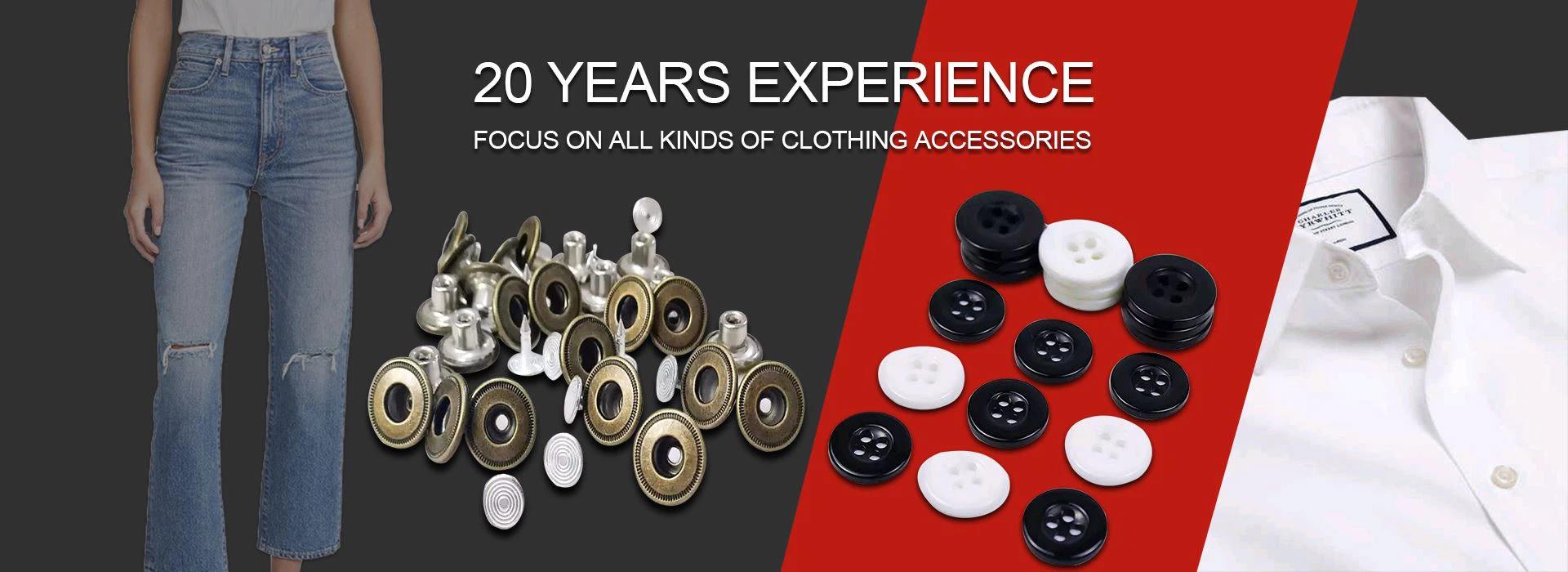
The common colors of metal buckles are silver, gold, light, bronze and other colors, and the materials are copper, silver, gold-plated, alloy and other materials. It is mostly used in denim shirts, denim jackets, jeans and other clothing.
Most metal buttons are electroplated. When buying clothes with metal buttons, you should check whether the electroplating process on the surface is uniform and the color is bright.
Some more casual suits use metal buttons, but more formal suits generally do not use this type of button.
Recommended rate: ★★
5.7. Resin buckle
The resin buckle has good wear resistance, high temperature resistance, and various designs and colors. The resin buckle is first carved by machinery and then polished, so the surface is smooth. Strong plasticity, can be made into different shapes and carved different patterns on the surface.
Resin buckles are cheaper and are more common in low-cost fast fashion brand ready-to-wear. Because the texture does not look as high-end as horn buttons and shell buttons, and it is cheap, such buttons are generally not used in big-name ready-to-wear and top-level haute couture suits.
Recommended rate: ★★
5.8. Wood buckle
In the 18th century, the noble class used shell buttons to symbolize their identity, while the wooden button became a representative of the lower class. Nowadays, few suits use wooden buttons, and fashion designers use this type of suits in pursuit of chic designs.
Recommended rate: ★
5.9 plastic buckle
Plastic buttons are the cheapest and lowest grade of all buttons.
The processing forms of resin buckle and plastic buckle are different, and the finished effect is also different. Plastic buttons are generally die-cast by machine, so there will be a line at the edge of the button. This line is also called the clamping line. Some factories will remove this line with corresponding processes in order not to affect the appearance during processing.
Recommended rate: ★


