

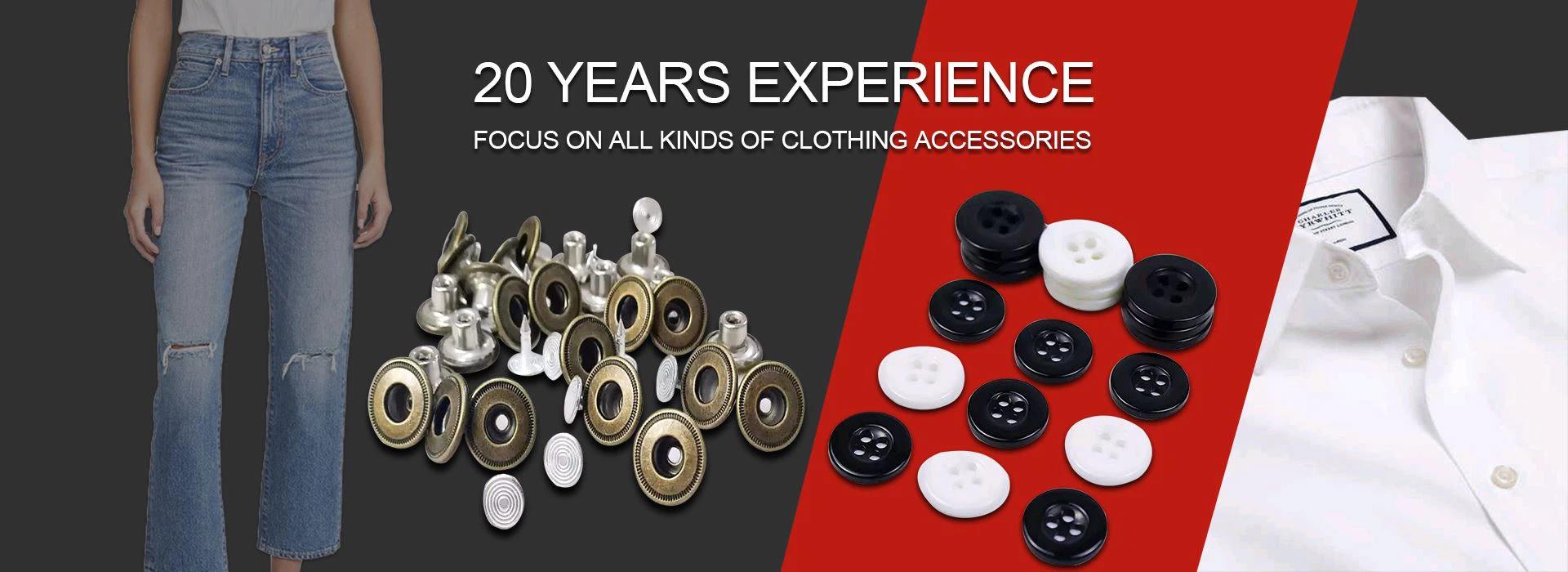
The history of Niuyouhui: The past is like a pearl, the future is beyond imagination
Oct 26, 2023
In the 18th and 19th centuries, buttons were comparable to jewelry and the finishing touch of clothing;
Today in the 21st century, buttons have gradually become one of the most inconspicuous accessories in clothing.
With the development of society, people pay more attention to practicality in daily clothing, and the functionality of buttons gradually outweighs the artistry.
But have you really understood buttons?
Button - a small button with a world of its own.
In modern society, when people buy clothes, they pay attention to tailoring, materials, etc., but few people focus on buttons. However, in the West in the 18th and 19th centuries, buttons were very ostentatious and even had the meaning of "jewels and treasures".
In the eyes of many modern people: buttons are just accessories. In the previous clothing design, buttons were the focus and the finishing touch of the clothes - what material are the buttons made of? Where to use it on clothes? Does it match the clothing fabric? These are details that will be taken into consideration in the design.
The beauty of the "quality" of buttons
Among the many details, the material of the buttons is the cornerstone of beauty. Button materials are generally divided into two types: pure natural and non-natural. Pure natural such as shells, fruits, horns, etc., and non-natural such as metal and resin. Natural materials have richer textures and lack of craftsmanship, while non-natural materials have incomparable advantages in terms of practicality and cost-effectiveness.
horn buckle
The horn buttons mentioned here are not buttons in the shape of horns, but buttons made of horns. Horn is also the most widely known natural button material. Due to the texture of the horn itself, different processing methods produce different effects. Such as sandblasting and fire, can present different texture effects.
fruit buckle
Fruit buttons are often thought of as resin buttons. In fact, fruit buttons are made from a fruit called Tagua tree native to South America. Because of its ivory-like color and texture, many high-end clothing are indispensable for fruit buttons. Decorate. However, due to its weak water resistance and storage properties, fruit buttons are not as widely used as other materials in daily clothing.
Resin buckle
The most important component of resin buttons is resin. During the production process, accelerators or curing agents are added, and some color pastes are added. In the later production process, other materials may be added to create different modeling. Different conditions such as concentration and temperature will bring ever-changing patterns and colors to the resin buckle.
shell
The buttons made of shell are exquisite and translucent, with fine texture, and the luster of pearls seems to be visible under the light. Shell buttons are often matched with light clothing, gloves, hats, boots, etc. Its texture is natural and rich, retro and elegant, and it is favored by big-name women's clothing.
metal button
Metal buckles, also known as "buttons", are made of aluminum, stainless steel, copper and other metal materials. The styles and types of metal buckles are undoubtedly the most common among all buttons. It can also be combined with other materials to create various shapes. Same beauty.
Metal edge + resin buckle
In addition, there are buttons made of glass, ceramics and other materials. Upon closer inspection, there is no limit to the material of buttons. Wood, pearls, plastics, anything that complements the design of clothing can be used as button materials. Even the buttons themselves can become creations.
Colorful button painting
The beauty of the button itself
What the button paintings show: Without the help of clothing accessories, buttons themselves are also beautiful existences. Leaving aside everything else, let’s just talk about buttons - metal buttons look like bright crescents after polishing, and are frosted to add a touch of texture; horn buttons seem to carry profound years after being burned, and shell buttons reflect colorful luster in the sun. . The beauty of the button itself lies not only in the material, but also in the changes given to it by the craftsmanship.
Shell buttons are the first generation of professional button products in my country. my country is extremely rich in raw materials of shells and the production process of shell buttons is also very sophisticated. The "Button Museum" in Xitang Town, Zhejiang Province restores the historical production process of shell buttons.
The beauty of buttons lies not only in the materials given by God, but also in the careful design and polishing by humans. It also bears witness to the inheritance and transformation of humans. Buttons are like shining pearls in the long river of history. Their inheritance will never be extinguished and their brilliance will not diminish.
About four to five thousand years ago, in the late primitive society, human ancestors began to use stone belt hooks. In addition to fastening clothes, they also showed the status of the user.
There is very little information on typical buttons over the course of more than a thousand years. It was not until the military uniforms of soldiers in the Qin Dynasty that the prototype of modern buttons slowly appeared. But ordinary people and class officials still use belt hooks.
Buttons make it easy to fasten the military uniform and make it flexible to put on and take off. During the Southern Song Dynasty, people began to use such buttons on their clothing. This is the reaction of people's demand for buttons and the improvement of their production level after the natural development of society.
The cloth buttons on the clothes of the Southern Song Dynasty are located on the right shoulder of the person in the painting, connecting the skirt; previously, hooks and buckles were mostly used to connect clothes.
Cloth buttons are the first buttons in the modern sense. Previously it was "buckle", and thereafter it was "button" button.
It is worth mentioning that metal buttons did not appear in contemporary times. As early as the Ming Dynasty, buttons made of gold, copper and other materials were already popular. Metal buttons in the Ming Dynasty were made of pure gold and alloys. Pure gold was often inlaid with jade and jewelry and was used by the upper class and wealthy mansions. Some were also made of copper and other materials and were used by the lower classes.
After the emergence of metal buttons, people borrowed the word "button" as their proper name to distinguish them from cloth "buttons".
The advantages of metal buttons are that they are simple, lightweight, high-quality, low-cost, and durable. Therefore, with the development of the times, metal buttons have gradually become the most common buttons in people's daily lives.
The history of buttons you don’t know: The past is like pearls and treasures, and the future is beyond imagination. The history of buttons you don’t know: The past is like pearls and treasures, and the future is beyond imagination.
The development of buttons to this day, from the ostentatious and decorative properties of ancient times to the practicality of today, is the inevitable result of the narrowing of class gaps, the gap between rich and poor, and the advancement of historical trends. So how will buttons develop in the future?
When decoration, practicality and other functions are fully developed, today in the 21st century, what we should focus on is sustainable development.
Perhaps in the future, buttons can carry more functions. The "technological buttons" that can be located and monitor physical health data in novels, movies and TV dramas can actually exist and be widely used.
But no matter how it develops, buttons with safe materials and strong practicality will not be eliminated by history; energy saving, emission reduction, and environmentally friendly and green technology are always the goals of sustainable development.


